Scouting for Food: Helping Neighbors, Building Values
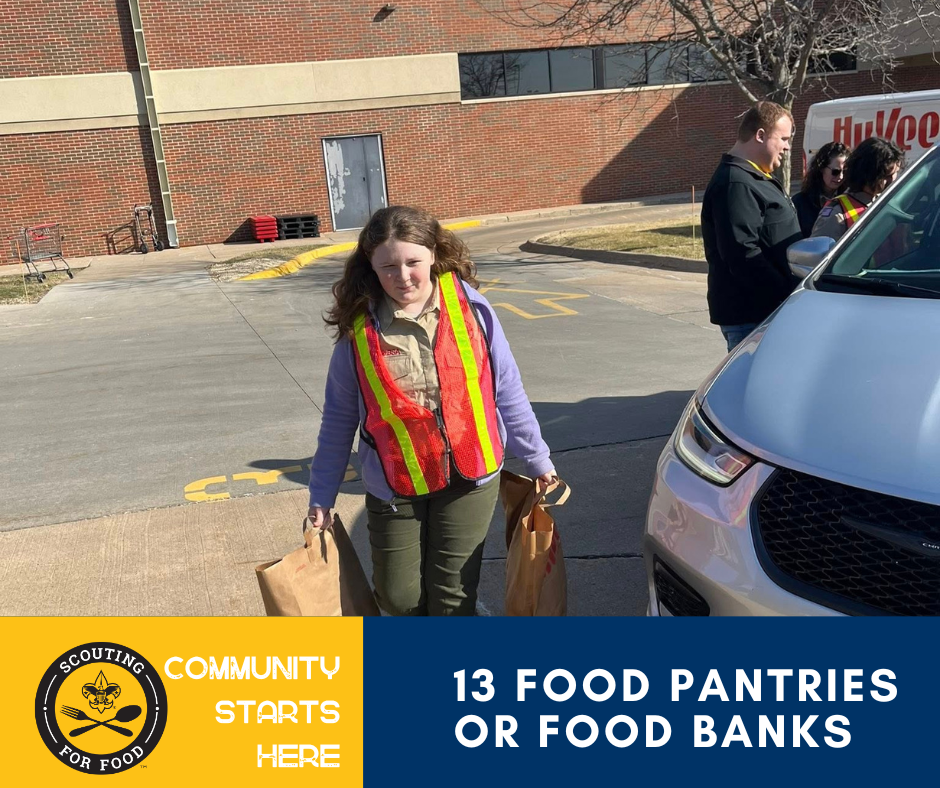
Each year, Scouts across our communities take part in Scouting for Food, one of the most meaningful service projects in Scouting. What begins as a food drive quickly becomes a lesson in empathy, responsibility, and giving back—values that Scouts carry with them long after the bags are collected.
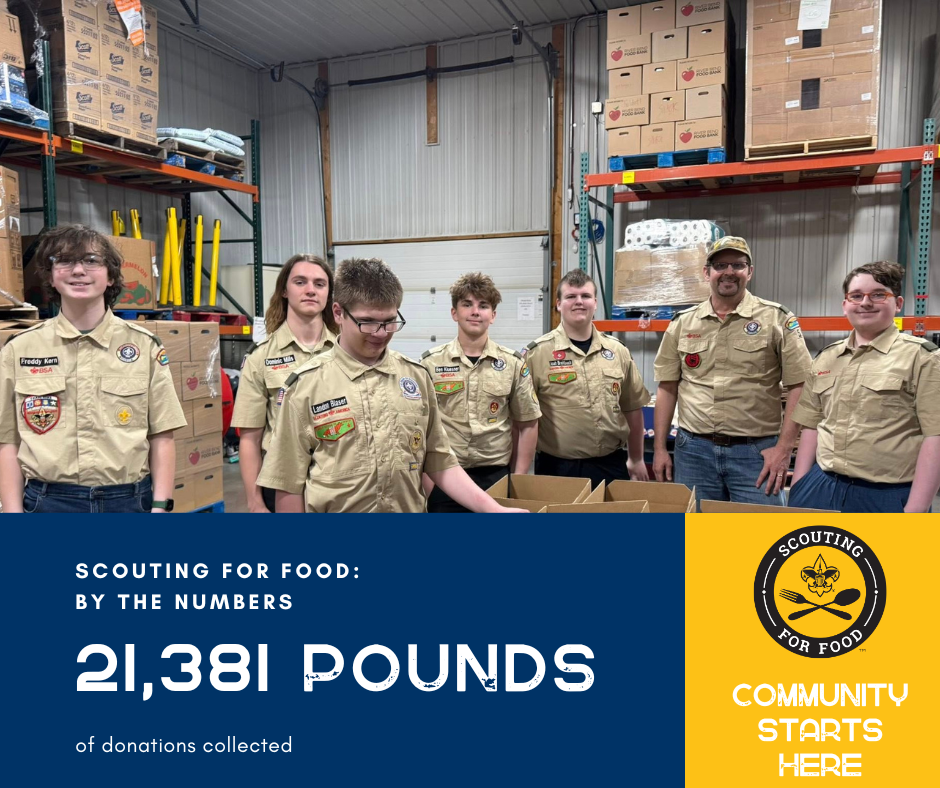
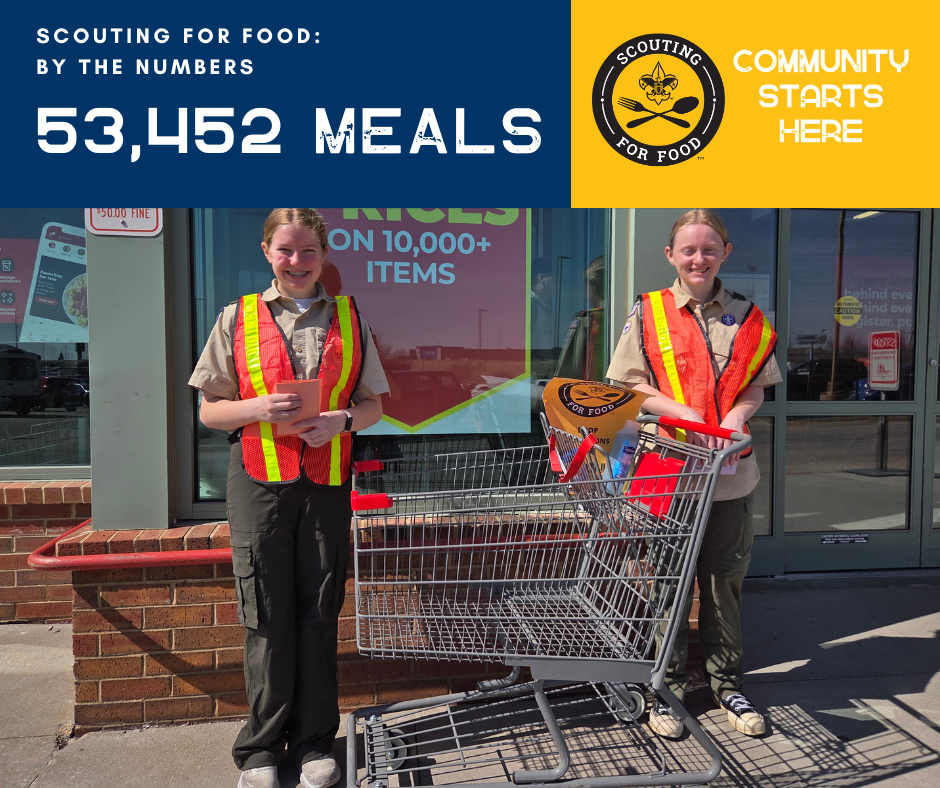
In 2026, Scouts collected a total of 21,381 pounds of food and other items, providing the equivalent of more than 53,452 meals to local families and individuals in need.
For many Scouts, the importance of Scouting for Food is simple and deeply personal. As one Scout shared, “It’s important because you’re giving back to people who might have done something for you—and to people who can’t always buy food for themselves.” Others spoke about helping neighbors who are struggling, noting that “you don’t want people to starve,” and that everyone deserves access to food.
Scouts repeatedly emphasized community impact. “It’s all about helping the community and giving back,” one Scout explained, while another added that the project helps ensure “people get the resources they need to survive.” Several Scouts mentioned that Scouting for Food helps people who are homeless or families who may not always know where their next meal is coming from.
Beyond feeding people, Scouts also recognize the broader meaning of the project. One Scout noted that Scouting for Food “shows how kind people are,” while another shared that it helps local charities and food banks while also “raising awareness about the good things Scouting does in the community.”
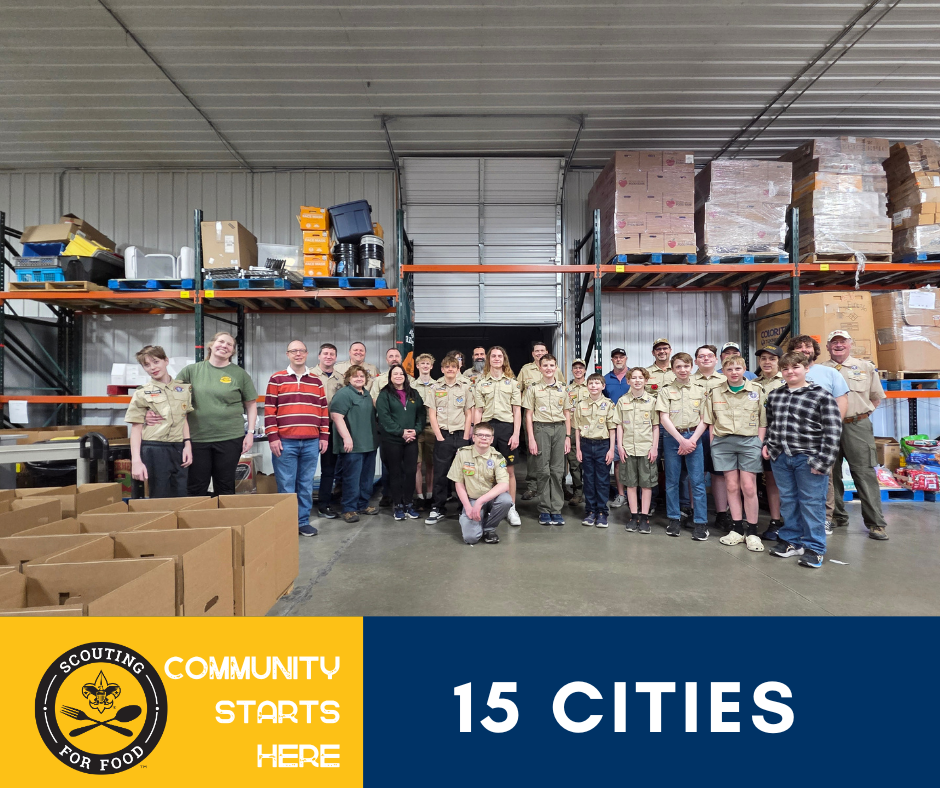
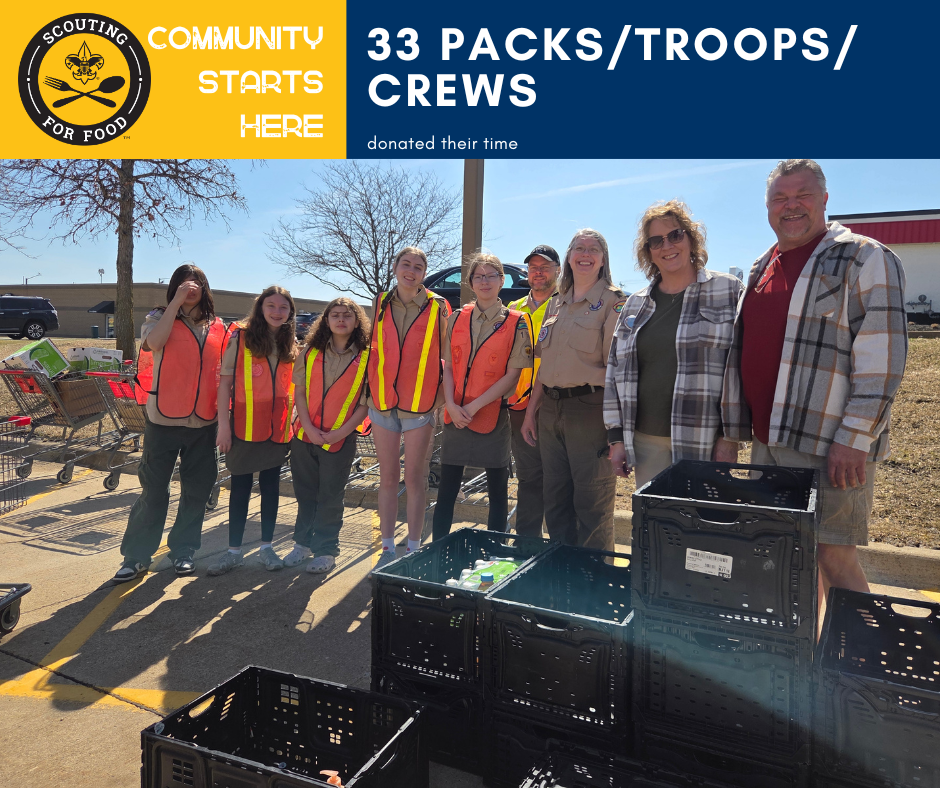
Communities across the area all played a role in this success. Dubuque Scouts contributed 7,285 pounds, while strong participation from Epworth/Farley/Peosta, Bellevue, Manchester, Dyersville, and many other towns helped ensure food pantry shelves are better stocked for the months ahead. Every bag collected represents real meals and real relief for someone in need.
Scouting for Food is more than a service project—it is a powerful reminder that young people can make a tangible difference. Through their actions, Scouts learn that when they work together, they can help ensure their neighbors don’t go hungry and their communities grow stronger.